Why Does Your Business Need a Digital Marketing Strategy?
Picture a customer in Kozhikode who needs a service you offer. She doesn't call anyone yet. She searches on her phone, opens two or three Instagram pages, reads the reviews, and maybe asks a cousin. Only then does she message one business. Was it yours?
That moment is what a digital marketing strategy is for. It is a written plan that ties your goals to a defined audience and the channels where that audience spends time. Plenty of owners skip the plan, post when they remember, boost a reel now and then, and hope. Some weeks it works. Most weeks nobody can say why.
Here is what a proper strategy contains, why it pays for itself, and how to build one without hiring a team of ten.
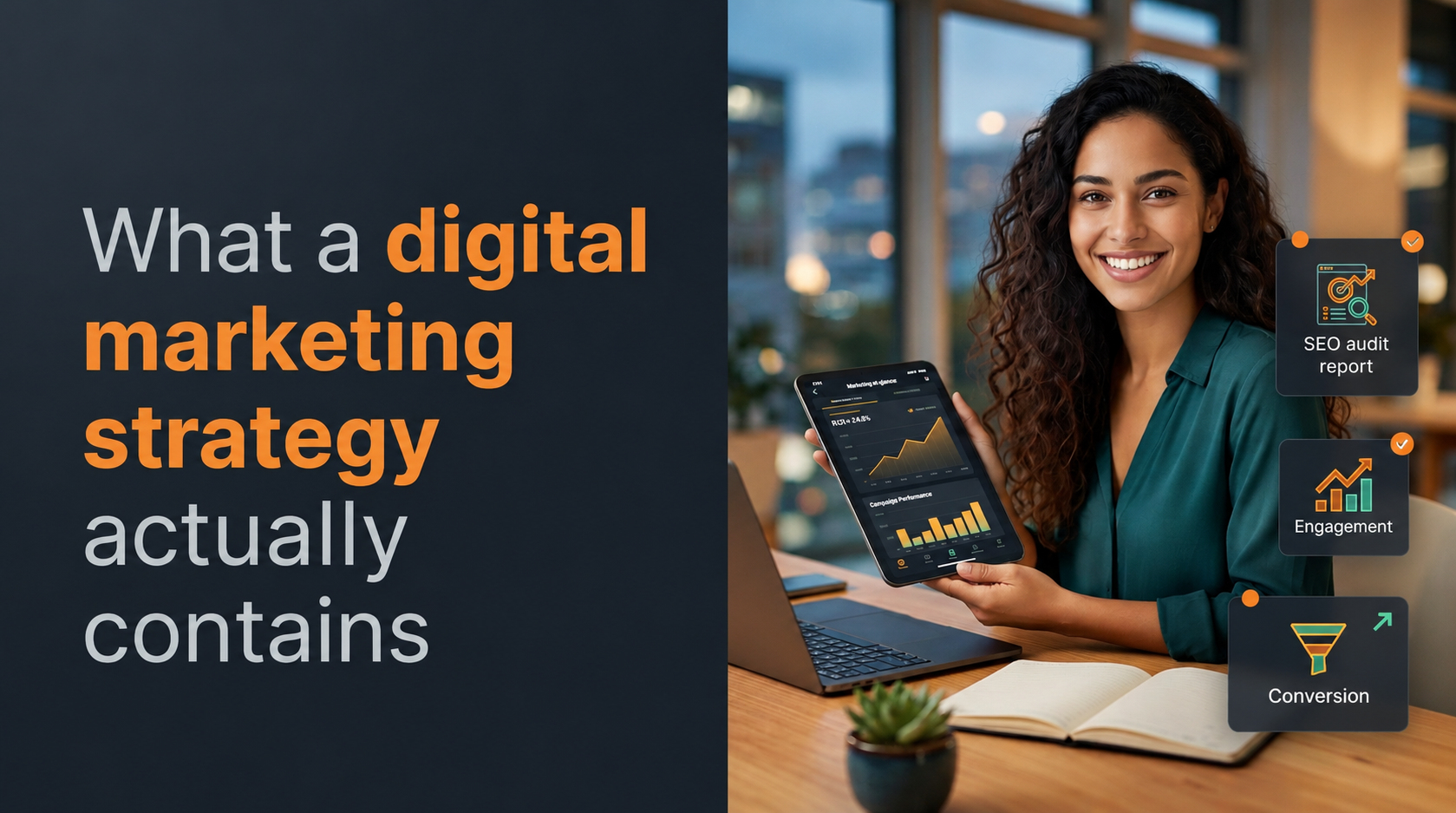
What a digital marketing strategy actually contains
Start with the result you want. Enquiries? Online orders? Walk-ins to your shop? Pick one, because it shapes every other choice.
Next comes the buyer. Age and location are a start, but what you really need to know is which apps they open every morning and what question they type into Google before spending money.
From there you decide on channels (search, social media, paid ads, email, WhatsApp, your Google Business Profile), the kind of content you will publish, how much you can spend, and for how many months. The last piece is measurement: the two or three numbers you will check every month to see whether the plan is working. If a plan can't answer these questions, it isn't finished yet.
Seven reasons your business needs a digital marketing strategy
1. Buyers research before they contact you
Almost nobody pays for a service without looking it up first. They compare prices, scroll photos, and read what others said. A strategy keeps your business visible on Google, Instagram, Facebook, and YouTube during exactly that research phase.
2. Regular activity beats occasional bursts
Posting daily for two weeks and then disappearing for a month teaches followers to forget you. A calendar fixed to one clear goal fixes that, and each post has a job to do.
3. A small business can win by focusing
Big brands spread budgets across many cities. You can put everything into one. Sharp targeting and good local SEO often beat larger spending, especially in cities where many competitors still have weak online profiles.
4. You can see where the money went
A newspaper ad rarely tells you who responded. Online, you can see views, clicks, calls, and purchases. That lets you move money to the ads that work and stop paying for the ones that don't.
5. Familiarity turns into trust
People are more comfortable buying from a business they have seen many times. Useful posts, honest reviews, and a tidy profile create that feeling, and the decision is often made before price even comes up.
6. It keeps you focused on revenue
A reel can reach fifty thousand people and bring no customers at all. A strategy tracks each stage of the buyer's path, from first view to enquiry to sale, so you can see where people drop off and fix it.
7. Every campaign leaves a lesson behind
Each post and ad produces data on what people clicked, ignored, or shared. If you review it monthly, your third month should clearly outperform your first.
The main parts of a digital marketing strategy
Search engine optimization helps people find you when they type a query. For a local business, the early gains usually come from a complete Google Business Profile and pages written around location-based searches.
Social media marketing keeps your brand in front of people and lets them see your work and ask questions. The best social media marketing agency for your business can save months of trial and error by handling the content plan, the posting rhythm, and audience growth.
Paid advertising speeds things up. A capable social media ads agency sets up targeting, designs the creatives, manages the budget, and reports what each lead cost, so you know exactly what the spend returned.
Content marketing covers articles, videos, and short clips that answer questions customers already have, and it builds your search presence over time. Email and WhatsApp keep past customers in touch and are often the cheapest route to repeat orders. Analytics ties the rest together, which means tracking leads, cost per lead, conversions, site visits, and return on investment.
How to build your digital marketing strategy
Begin with a goal you can count, such as fifty qualified enquiries a month. Then write a short profile of your ideal customer, including where they live, what they care about, and what problem they want solved.
Look at three or four competitors and note what they do well and what they overlook. That gap is where you can stand out. After that, choose platforms based on where your customers really are. Two channels handled well will beat five handled badly.
Draft three months of content (topics, formats, how often you will post), then set a budget and decide how much goes to organic work and how much to ads. Once a month, sit down with the numbers and change whatever isn't working.
Why local businesses should look for the best digital marketing in Calicut
If your customers live in Kozhikode and nearby towns, local understanding changes the results. The best digital marketing in Calicut accounts for how people in the region search, which languages they respond to, and how demand rises around Onam, Vishu, Eid, and other festival seasons. It also targets "near me" searches, which often come from people who are close to buying.
When you compare digital marketing partners, ask whether they can show results from past clients that you can verify. Find out if they start with a plan or jump straight to posting and boosting, and whether their reports make sense to you without a technical explanation. A good partner covers SEO, social media, and paid ads together, and gives you honest timelines.
Mistakes that waste marketing budgets
The most common one is launching campaigns before deciding what success looks like. Close behind is opening profiles on every platform and updating none of them properly. Some owners celebrate follower counts while enquiries stay flat. Others depend only on paid ads and leave their search visibility untouched, or run campaigns with no tracking at all, so nobody knows what worked. And almost everyone, at some point, expects results within a week.
Questions business owners often ask
- What does a digital marketing strategy cover?
It covers the goals, audience, channels, content, budget, and measurements that guide your online marketing, all in one written plan.
Is a digital marketing strategy worth it for a small business?
Yes. Limited budgets leave little room for waste, and a plan helps you target the right people and see what each rupee brings back.
2. How soon will I see results?
Paid ads can produce enquiries within days of going live. Search visibility and organic social growth take longer, usually a few months of steady effort.
Should I hire an agency or build an in-house team?
An agency suits businesses that lack time or specialist skills, since it helps avoid expensive mistakes. Many companies start with an agency and move some tasks in-house as they grow.
3. How do I pick the best social media marketing agency?
Review their portfolio, client feedback, and a sample report. Then ask whether they design plans around your goals or hand every client the same package.
4. What does a social media ads agency do?
It plans, designs, launches, and refines paid campaigns on platforms like Facebook and Instagram, with the aim of bringing leads or sales at a cost your business can sustain.
Final thoughts
Good marketing is easy to describe in one sentence, and that sentence usually names a goal, an audience, and a channel. If you would like help writing yours, get in touch with our team for a free consultation.